
Finance Minister (FM) Nirmala Sitharaman has presented a forward-looking Budget, reinforcing the government's commitment to 'Reform, Perform, and Transform'.

New lower GST rates kicked in from Monday, resulting in a slashing of prices of as many as 375 items ranging from toothpaste and shampoo to cars and television sets, a move seen as an attempt to boost consumption to cushion an economy facing tariff headwinds. Tax rates of 5, 12, 18, and 28 per cent have been clubbed into two rates of 5 per cent and 18 per cent, resulting in a reduced price of 99 per cent of daily use items.

The Congress party has criticized Prime Minister Narendra Modi's handling of GST reforms, calling them inadequate and demanding an apology for the tax imposed on essential items. They argue that the reforms are merely a 'band-aid' solution and that the government should address the states' demand for extended compensation.

Some of the leading life insurance companies have reported a sharp decline in the number of lives covered in FY25, largely due to a slowdown in credit-linked life insurance policies. Stress in the microfinance segment has reduced loan disbursements and, in turn, the flow of new customers to insurers.

Several executives argue that UPI has the potential to grow tenfold, but warn that the absence of a monetisation model risks stagnating the real-time payments system, which has been recording all-time-high transaction volumes every year.

India's corporate bond market, driven by public sector undertaking (PSU) banks and financial institutions last year, is losing momentum since the second quarter of FY26.

Sri Lanka stays with you not just in memory, but gently reminds you what a society can achieve when heart and heritage guide the way.

Union Commerce and Industry Minister Piyush Goyal on Thursday described the reduction in GST rates as "game-changing" and the "biggest reform" since independence, as he asked the industry to pass on the full benefit to consumers.

Maharashtra has topped the list of states with the most favourable ecosystem for the growth of Farmer Producer Organisations (FPOs), replacing Madhya Pradesh, which has slipped to second place, according to the latest Ease of Doing Business for FPOs (EoDBF) ranking.

"Our target is to disburse at least Rs 2,000 crore this year. Retail business constitutes 94 per cent of our business. Our total disbursal last year was Rs 7,100 crore and we plan to grow by 40 per cent this year," says LIC Housing Finance's new CEO and director, R R Nair.

Since items in the 12% category account for only about 5% of total GST, the additional boost to consumption may not be significant, points out M Govinda Rao.

Indian corporate are increasingly shifting away from bank funding towards alternative sources, such as equity and bond markets, as their deleveraged balance sheets have improved their ability to raise equity at better valuations. Moreover, the 100 basis points (bps) rate cut by the Reserve Bank of India (RBI) has enabled them to access long-term funds from the debt capital market at cheaper rates.

Tamil Nadu Industries Minister TRB Rajaa claims Uttar Pradesh's development is funded by Tamil Nadu's tax contributions to the central government, sparking a political debate over regional economic disparities.
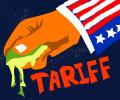
'If the near-term economic pain is absorbed more by those who have the ability and the financial strength to do so, then small and medium enterprises in downstream industries will emerge stronger from the trade imbroglio.'

Deep-tech now forms over half of VC portfolios in India as firms like Cornerstone, Unicorn India Ventures and All in Capital back startups combining research with scalable models

The RBI under former governor Shaktikanta Das resisted pressures to cut interest rates through 2024 as it kept its 'Arjuna's eye' trained on inflation, but the central bank under a new detail-oriented head will soon have to take a call if it can continue sacrificing growth. Das, a career bureaucrat who in 2016 oversaw Prime Minister Narendra Modi's highly disruptive demonetisation move, left a lasting legacy as he demitted office towards the end of 2024 after expertly navigating monetary policy for six years, the highlight of which was steering India's recovery through the pandemic.
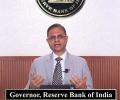
'India has the potential to grow at more than 7%, with the monetary policy providing a supportive hand.'

'This is not a case of tax evasion but the result of long-standing ambiguities in GST rules and unawareness.'

'In the real world, it's not about being the smartest person in the room -- it's about being the one who stays grounded, adaptable and emotionally steady when everything else shakes,' says Ankita Kaul, a National Board certified health and wellness coach from the Dr Sears Wellness Institute.

Uncertainties over the impact of the United States' (US') tariffs on India, along with the ongoing transmission of past rate cuts, prompted the members of the Reserve Bank of India's Monetary Policy Committee (MPC) to maintain the status quo during the August meeting, the minutes showed. While some of the external members highlighted their concern over growth, the internal members cited the one-year headline inflation rate overshooting the 4 per cent target.

Plans for big bang reforms in the GST regime by Diwali, the Putin-Trump summit and S&P upgrading India's sovereign credit rating are likely to instil optimism in the domestic equity market in the week ahead, analysts said. Besides, trends in global markets and the trading activity of foreign investors would also impact domestic investors' sentiment.

'MIB which is a part of retail, will grow in the range of 20 per cent.'

Prime Minister Narendra Modi launched his Bihar assembly poll campaign, asserting that the NDA under Chief Minister Nitish Kumar will break all previous electoral records. He criticized the INDIA bloc and highlighted the NDA's cohesiveness and development efforts in Bihar.

Private sector banks that announced their earnings for the October-December quarter (Q3) of 2024-25 (FY25) reported a rise in credit costs due to higher provisions, mainly for unsecured retail loans.
Reserve Bank of India (RBI) Governor Sanjay Malhotra, with Deputy Governors Poonam Gupta, Swaminathan J, T Rabi Sankar, and M Rajeshwar Rao, responded to a range of queries in the post-policy interaction with the media

Retail inflation slipped to 1.54 per cent in September from 2.07 per cent in the preceding month mainly due to subdued prices of food items, including vegetables and pulses, according to government data released on Monday. The consumer price index (CPI) based inflation was 5.49 per cent in September 2024.

There are some apparent paradoxes visible in the data from the first quarter of 2025-26 (Q1FY26). The gross domestic product (GDP) delivered a positive surprise with 7.8 per cent year-on-year (Y-o-Y) growth.

India's new climate pledge to the UN could be weakened by its growing use of coal, even as the country plans a 2035 roadmap to cut emissions and boost clean energy.

The Adani Group reported its highest-ever trailing twelve-month EBITDA of Rs 90,572 crore, driven by strong performance in its core infrastructure and clean energy businesses, along with contributions from its emerging airports segment, the conglomerate said on Thursday. The group reported an earnings before interest, taxes, depreciation and amortization (EBITDA) of Rs 90,572 crore for the period from July 2024 to June 2025, up from Rs 85,502 crore pre-tax profit in the trailing twelve months ending June 2024, it said in a statement.

'It has remained around 38 per cent over the past four to five quarters.'

Any potential tariffs on pharmaceutical imports into the US are unlikely to impact the credit profiles of Indian firms except for a short-term pricing blip, according to a report by India Ratings and Research (Ind-Ra). The report stated that the US generics market contributes around 35 per cent to the total revenue of the leading Indian pharma firms.

'As these segments are growing at 25 per cent for the last three years, credit quality has been extremely good.'

Given the stronger rural activity, and potential goods and services tax (GST) impact, investors are bullish on the two-wheeler (2W) segment. In August, dealers in the domestic market picked up 11 per cent more 2Ws year-on-year (Y-o-Y), despite only 2 per cent growth in retail registrations. This indicates inventory stocking ahead of the festival season. Export trends were good. TVS Motor and Royal Enfield may have gained domestic market share.

Bad loans in the agriculture sector remain elevated, with several public-sector banks (PSBs) reporting higher slippages in the April-June quarter of FY26. For many banks, non-performing assets (NPAs) in farm lending were 5 per cent or more, with some nearing double digits.'

"We currently manage collections for over 98 million retail and small-business loan accounts, covering a loan book of about $250 billion," says Rishabh Goel, cofounder and chief executive officer (CEO) of Credgenics, a software-as-a-service platform for debt collection. With more than 700 million smartphone users and over 450 million UPI users, digital access is everywhere.

But the big question that keeps striking the mind is, if Indian tennis system can actually claim this win as its own. The answer is: partially.
A clampdown on fresh personal loans, credit cards and auto loans is taking a toll on direct selling agents hired by banks to push these products. According to estimates, banks have reduced the number of DSAs by 15-25 per cent, while marketing expenses are 35-40 per cent lower.

Budget 2025-26 delivers a carefully calibrated strategy-stimulating demand and investment while keeping fiscal discipline intact. In an environment marked by global trade disruptions, and a softening in urban consumption, Finance Minister Nirmala Sitharaman has taken a measured approach.

The sector's IPO pipeline is led by Tata Capital's Rs 17,000 crore issue, followed by ICICI Prudential Asset Management at Rs 10,200 crore and Billionbrains Garage Ventures at Rs 6,000 crore.

GST 2.0 may cushion consumers against US tariffs, but like the 2019 corporate tax cut, it risks being another tactical fix rather than a structural growth strategy, expects Debashis Basu.
